What is a DEXA scan?
If you haven't heard of a Dexa scan before, it stands for Dual-Energy X-ray Absorptiometry.
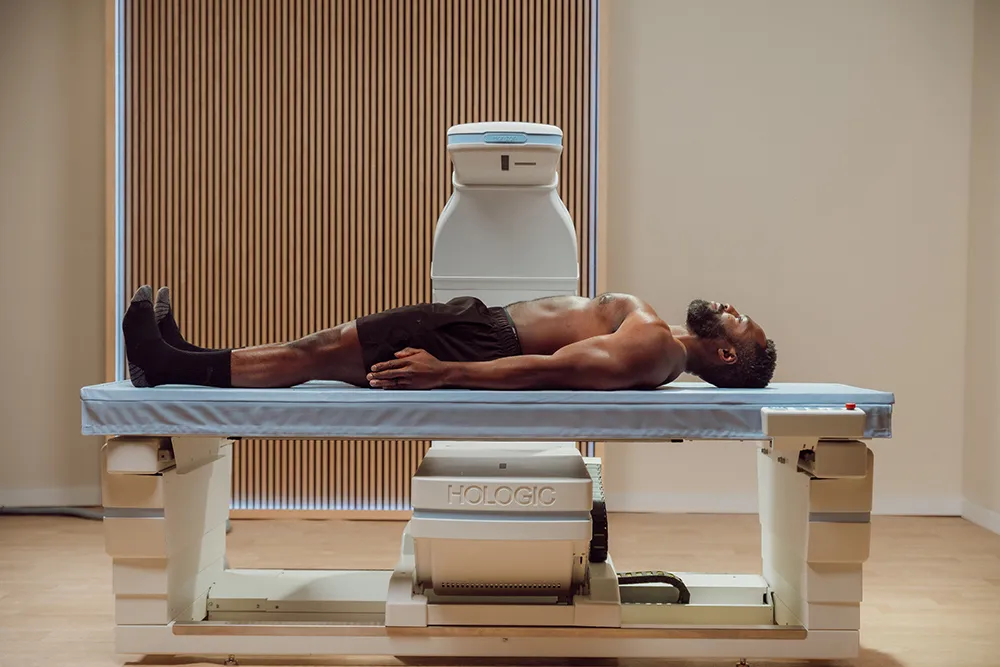
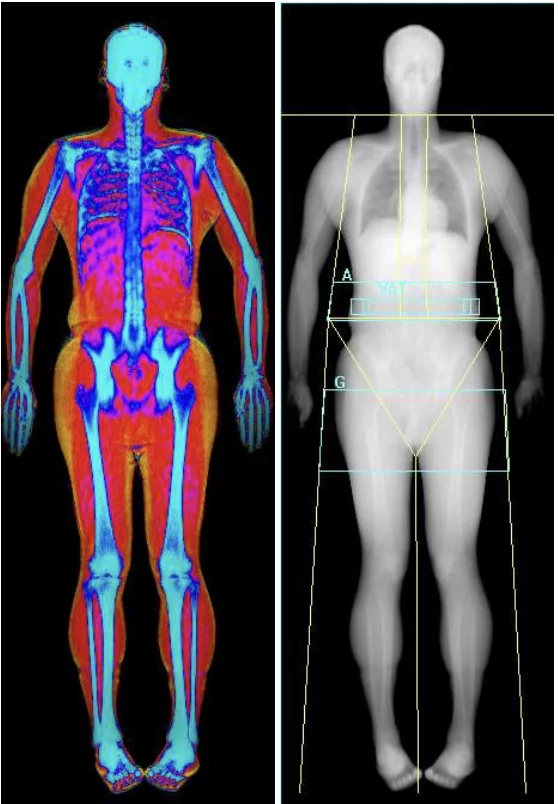
It's a low-dose imaging scan that passes two different X-ray energies through your body to measure exactly how much of you is fat mass, lean muscle tissue, and bone mineral density, broken down by region.
That last part is important. Unlike body fat scales or even callipers, a DEXA scan doesn't just give you a single overall body fat percentage. It maps your body in segments — your arms, your legs, your trunk — so you can see precisely where fat is stored and where muscle is or isn't being built, as well as your bone density.
It's the same technology used in clinical research settings and by professional sports teams. Originally developed for bone density testing, it's also recognised globally as the gold standard for body composition analysis.
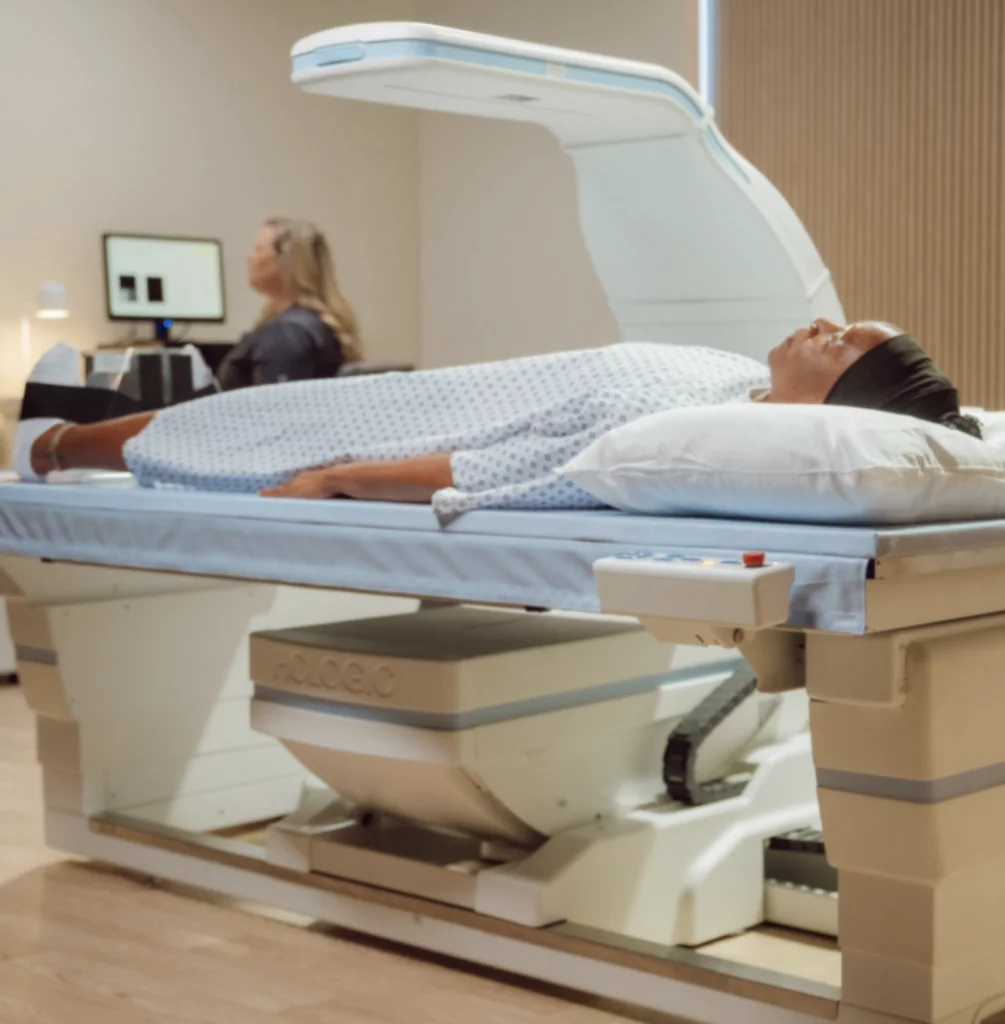
The scan itself takes around 3 minutes. You lie flat on a table, fully clothed, while a low-dose scanner passes over you. It's completely painless and non-invasive.
A DEXA scan is for anyone who wants accurate, actionable data about their body. Here's who benefits most:
If you've been "losing weight" but aren't sure what you're actually losing — fat, muscle, or water — a DEXA scan tells you exactly. It ensures your fat loss is real and that you're protecting your lean mass.
Bone density naturally declines with age, and muscle loss accelerates after 40. A DEXA scan creates an early baseline, so any changes can be spotted and addressed well before they become a problem.
Visceral fat — the kind stored around your organs — is one of the most significant risk factors for metabolic disease. A DEXA scan is the most accurate way to measure it and gives you a baseline to track against.
Beginning with a DEXA scan gives you a precise starting point. When you rescan three to six months later, the comparison data is incredibly motivating and helps your coach fine-tune your programme.
Optimising body composition for performance requires data, not guesswork. Muscle asymmetry, fat distribution, and bone density all have a direct bearing on how you perform and how you recover.
Tracking muscle growth on scales alone is unreliable. A DEXA scan gives you a precise measurement of lean tissue gain, broken down by body region, so you know your training is actually building what you think it is.
Why a DEXA Scan Is the Most Important Health Investment You Can Make
Here's something most people in Newcastle, and most people anywhere, don't know: you can be a "healthy" weight and still be carrying high levels of visceral fat.
You can be training consistently and still be losing muscle instead of building it. You can feel fine and still have bone density that puts you at long-term risk.
None of that shows up on a set of scales. None of it appears in a BMI score. It requires a scan that can actually see inside your body and tell you the truth.
When you walk out of your DEXA scan session at Pioneer Performance, you won't just have a printout. You'll have a conversation with one of our coaches who takes you through every number — what it means, where you sit relative to your age, and what your training should do about it.
Here's what the report contains.
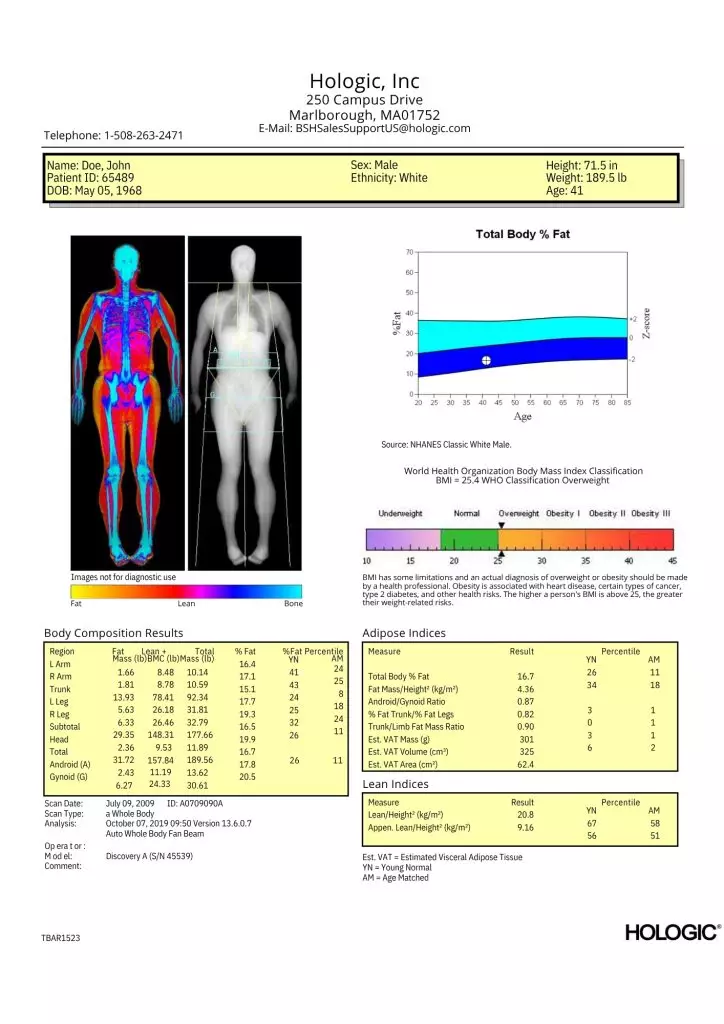
Total Body Fat Percentage
This is the headline figure — the proportion of your body weight that is fat. But unlike the rough estimate you'd get from a gym scale, the DEXA figure is accurate to within around 1%. It's also plotted against percentile charts for both your age group and young normals, so you can see exactly where you stand relative to the wider population. That context changes how you interpret the number entirely.
Regional Fat & Lean Mass Breakdown
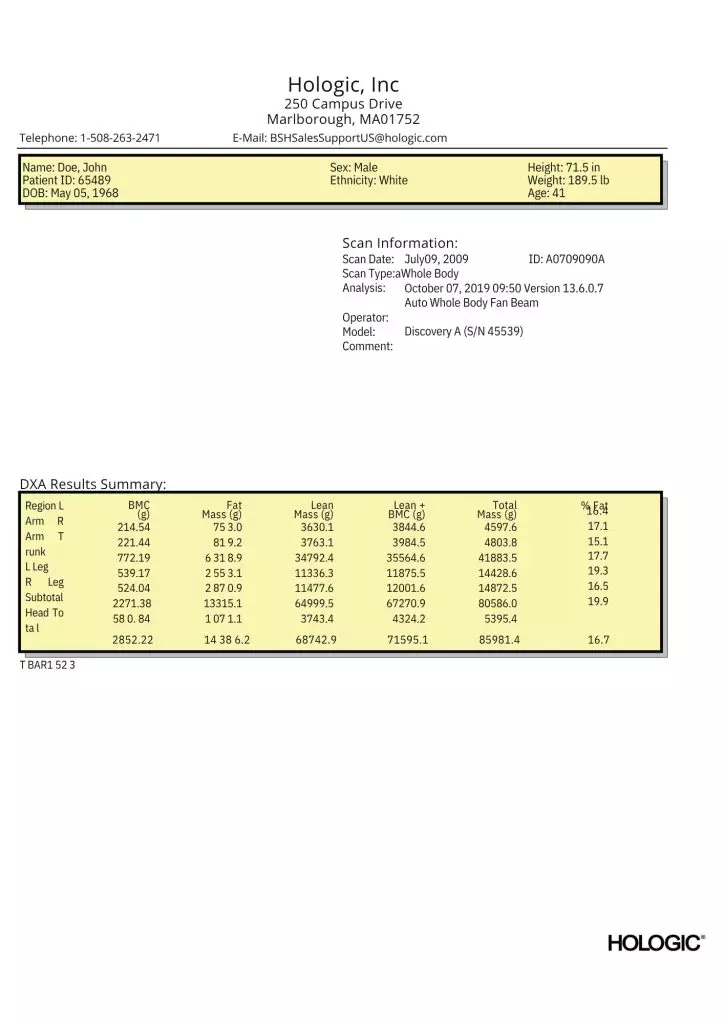
This is where a DEXA scan becomes genuinely unique. Rather than a single overall figure, the report breaks your body into regions — left arm, right arm, trunk, left leg, right leg — and gives you the fat mass, lean mass, and body fat percentage for each one independently.
This matters more than most people realise. Someone can have a healthy overall body fat percentage but carry a disproportionate amount of fat around the trunk, which carries very different health implications than fat carried in the limbs. It also reveals muscle imbalances between your left and right sides — something your trainer can then address directly in your programme.
Visceral Fat
This is arguably the most important number on the report, and it's one that no basic body composition tool can measure. Visceral fat is stored around your internal organs — your liver, pancreas, and intestines. Unlike the fat you can pinch, it's metabolically active and strongly linked to type 2 diabetes, heart disease, and chronic inflammation.
The DEXA report gives you three visceral fat measurements: estimated mass, volume, and cross-sectional area. Your Pioneer coach will put those numbers in context and show you exactly how your training and nutrition plan will move them in the right direction.
Android / Gynoid Ratio
The report measures fat in two specific zones — the android region around the abdomen, and the gynoid region around the hips and thighs. The ratio between them is a meaningful health marker. A higher proportion of central, abdominal fat is associated with greater metabolic risk, and it responds well to structured training and nutrition. The DEXA report makes it visible and trackable over time.
Lean Muscle Mass
Your lean mass is tracked both overall and by region. The Appendicular Lean Mass index — lean mass in your arms and legs relative to your height — is particularly useful for tracking genuine muscle development and identifying early muscle loss in people over 40.
If you're strength training, this number is your proof of progress. If you're losing weight, it tells you whether you're losing fat or burning through muscle you've worked hard to build. Those are two very different outcomes, and without a DEXA scan, most people have no way of knowing which one is happening.
Bone Mineral Content
Every region on the report includes a bone mineral content figure — the actual weight of minerals in your bones. For anyone over 40, or anyone with a family history of osteoporosis, this is an early warning system that most people never access until a problem is already established. Resistance training is one of the most effective ways to maintain and build bone density — and knowing your baseline gives you and your coach a clear target to protect and improve.
See a sample report below:
A Single Scan Tells You a Lot. Multiple Scans Tell You Everything.
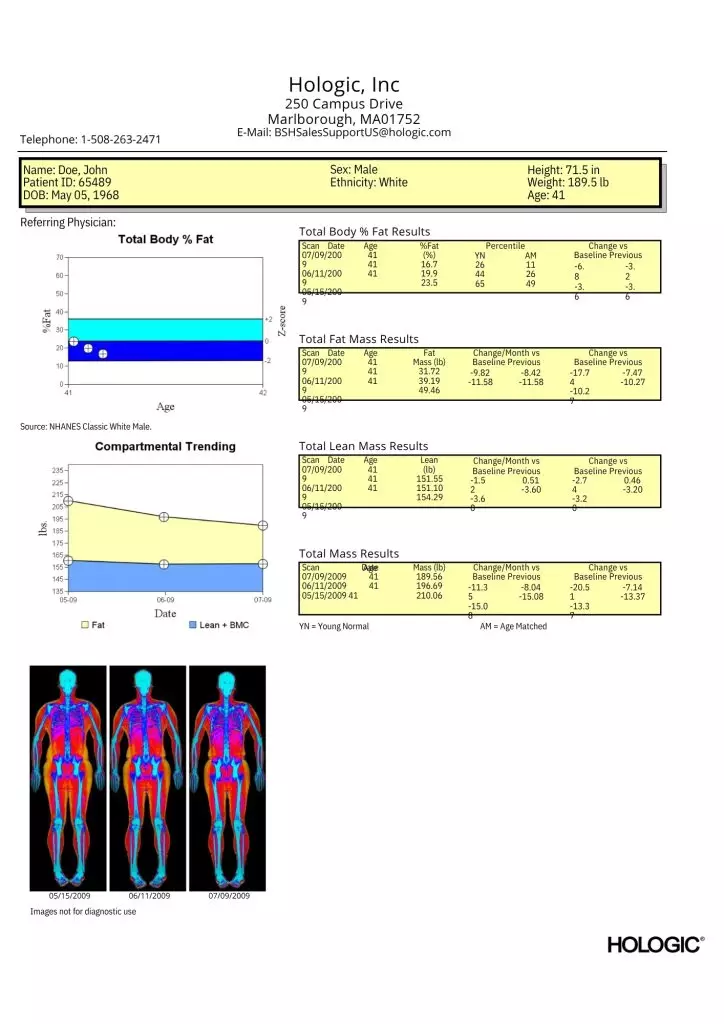
The real power of DEXA becomes clear when you scan more than once. Your report tracks body fat percentage, fat mass, lean mass, and total mass across multiple scan dates, showing you the change against your baseline and against your previous result.
That data doesn't just motivate — it tells you exactly what's working, what to keep doing, and where to adjust.
The first scan tells you the truth. Every scan after that tells you whether your training is working — in numbers, not feelings.
Use the form below to join the waitlist for our Dexa.
If you’re interested in personal training or being coached at Pioneer, get in touch by completing the below form.